
A Friendly 2026 Guide to the Malaysia SME Business Guide
So, you’re thinking about starting something of your own here in Malaysia. Maybe you’re tired of the 9-to-6 grind, or perhaps you’ve got that kopitiam chat with friends that always circles back to, “Eh, we should just start a business.” It usually starts with a dream—opening a cafe, doing some dropshipping, or finally launching that consulting gig you’ve been talking about for years. But then reality hits. Where do you even begin? Everyone talks about the Malaysia SME business guide like it’s some sacred text. But honestly, it’s not as scary as it sounds. It’s really just about understanding the landscape so you don’t trip over the little things. And in 2026, the landscape looks a bit different than it did five years ago.
Let’s sit down and have a proper yum cha session about it. Forget the textbook definitions. Let’s talk about what it actually means to be a small business owner here today.
What is SME in Malaysia: The 2026 Pulse
The Gatekeeper: SME Corp defines eligibility based on turnover (≤RM50m for Mfg, ≤RM20m for Services) and headcount [citation:4].
Digital Shift: 2026 is the year of e-invoicing compliance, which is now tied directly to financing eligibility [citation:1].
Survival Zone: SAMENTA warns that new compliance costs are eroding the typical 10-15% net margins of SMEs [citation:3].
Jump To Section
Wait, Am I Even an SME?

Before you even think about names or logos, you need to know which club you’re in. The government, banks, and grant providers all use a specific SME definition Malaysia to decide if you qualify for their help.
In Malaysia, the official rulebook from SME Corp is pretty straightforward. They split it into two main sectors: Manufacturing and Services (which includes everything else like retail, agriculture, and ICT).
If you’re in manufacturing, you’re considered an SME if you make less than RM50 million a year or have fewer than 200 full-time people working for you. For the service sector, the bar is slightly lower: annual sales under RM20 million or less than 75 employees .
Sounds simple, right? Well, here’s the thing. There’s a growing call from groups like the Federation of Malaysian Manufacturing (FMM) to update this. They argue that with inflation and business growth, these numbers are a bit outdated. Compared to countries like Japan or the US, our threshold is actually quite narrow. Some manufacturers are hitting that RM50 million mark but still feel like a mid-tier company struggling to compete with the big boys. They might get cut off from SME support just when they need it to scale up .
So, while the official categories are clear, the reality on the ground is a bit more fluid. If you’re on the upper end of that scale, just be aware that your “SME status” might be something you have to actively maintain or prove.
The 2026 Reality Check: It’s Not Just About SSM Anymore
Okay, so you know you’re an SME. Now what? A decade ago, the hardest part was probably the paperwork at the SSM counter. Today? The game has changed. Incorporating a business is the easy part—you can get your MyCoID in a couple of days . The real challenge in this Malaysia SME business guide for 2026 is staying compliant in a “data-driven” economy.
Think of it like this: before, the government just wanted to know you existed. Now, they want to see how you operate. The biggest shift is e-invoicing. Starting this year, if your business hits RM1 million in annual revenue, you have to use it. But even if you’re smaller, any single transaction over RM10,000 must be issued as an individual e-invoice to LHDN .
Why should you care? Because this isn’t just a tax thing anymore. Banks are starting to use this LHDN-validated data to decide whether to give you a loan. If your books are messy and your e-invoices don’t match your declarations, good luck getting that SME financing options Malaysia you were eyeing. Your digital footprint is now your financial reputation.
Ok, So How Do I Actually Start?
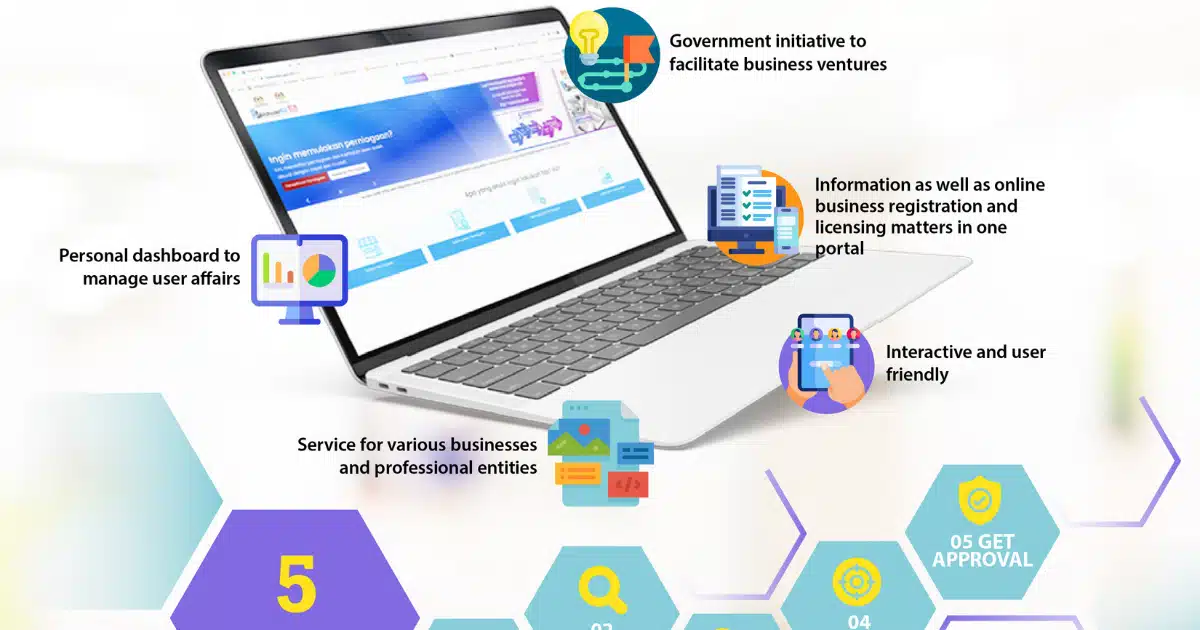
Let’s break down the how to start SME in Malaysia process into something we can all understand. Forget the legal jargon; here’s the ground-level view.
First, you need to pick a structure. Most people go for a Sdn Bhd because it protects your personal assets. If the business tumbang (falls), your personal car and house aren’t on the line. For locals, you can start one with just RM1. But if you’re a foreigner, the rules change. To get things like a work permit, you usually need paid-up capital of at least RM350,000 to RM500,000, depending on your industry .
Once that’s sorted, you register with SSM. Today, you can do this through the MalaysiaBiz Portal, which is a one-stop shop set up by the government to make life easier . You’ll need a company secretary—think of them as your business’s personal assistant to the government. They handle the annual filings so you don’t forget and get fined.
Next, you register with LHDN for your tax file. Then, you open a corporate bank account. Word of advice: bring all your documents, dress neatly, and be prepared to answer questions about your business plan. Banks are a lot stricter now about who they take on.
Finally, the part everyone forgets: licensing. Depending on what you do, you might need a licence from a specific ministry. If you’re opening a restaurant, for example, local councils (PBT) now tie your license renewal to hygiene standards like the BMW—Bersih, Menawan, Wangi (Clean, Attractive, Fragrant). If your toilet is dirty, they can technically not renew your license .
Ok, Tapi Modal Mana? Financing in 2026
Money. The eternal question. If you don’t have deep pockets, you’re probably looking at loans. The good news is that government support for SMEs Malaysia is quite active. There are schemes like the Portfolio Guarantee (PG) from CGC, where the government guarantees part of your loan so the bank is less scared to lend to you. Just recently, Maybank and CGC announced another RM1 billion tranche specifically for this .
But here’s the interesting twist in 2026: Green financing. Banks are now pushing “Sustainability-Linked Lending.” What that means is, if you can prove your business is ESG-compliant (think: environmentally friendly, good labor practices), you might get a lower interest rate. It’s like a discount for being a good corporate citizen .
There’s also a push to get SMEs “capital market ready.” The Securities Commission (SC) and SME Corp are working together to groom about 200 MSMEs to be able to raise funds from the stock market by 2026. It’s not just about loans anymore; they want to teach you how to play the big boys’ game .
And if banks are too slow? Peer-to-Peer (P2P) financing platforms like CapBay or Funding Societies are now a legit alternative. They’re faster, digital-first, and sometimes even have government-subsidised interest rebates .
The Stuff They Don’t Tell You at the Seminar

Every Malaysia SME business guide will tell you about grants and loans. But let’s talk about the hidden stuff—the “fine print” of running a business here.
First, the cost of compliance is going up. SAMENTA (the Small and Medium Enterprises Association) recently warned that 2026 is going to be a “survival zone” for many SMEs. Why? Because new rules cost money. You might need to hire a Data Protection Officer (if you handle customer data), or pay for new infrastructure to meet carbon tax rules. For a small business, these are costs that eat into your 10-15% profit margin .
Second, the digital burden is real. You can’t just sell on Shopee or Lazada with a personal bank account anymore. The platforms now require a valid SSM number and Tax Identification Number (TIN) to release your earnings. By July 2026, even micro-SMEs will be pulled into the e-invoicing net . If you’re running a small side hustle from home, the government is slowly but surely making sure you’re in the system.
Third, think about where you’ll work. You don’t need to rent a shoplot immediately. Many people start with a virtual office (costing around RM100 to RM800 a month in places like KL) or co-working spaces. This keeps your SME setup cost Malaysia low while you figure out if your business model actually works .
So, is it worth it? Absolutely. Malaysia is still a strategic gateway to Southeast Asia. We have a multilingual workforce, solid infrastructure, and a government that (despite the red tape) is genuinely trying to digitize and streamline processes . But going in with your eyes open makes all the difference.
Starting a business here isn’t about knowing all the answers. It’s about knowing the right questions to ask. And hopefully, this little chat gave you a few of those questions to think about over your next plate of nasi lemak.