Lauk Pauk & Series A Actually Reading the Malaysia Startup Ecosystem Insights
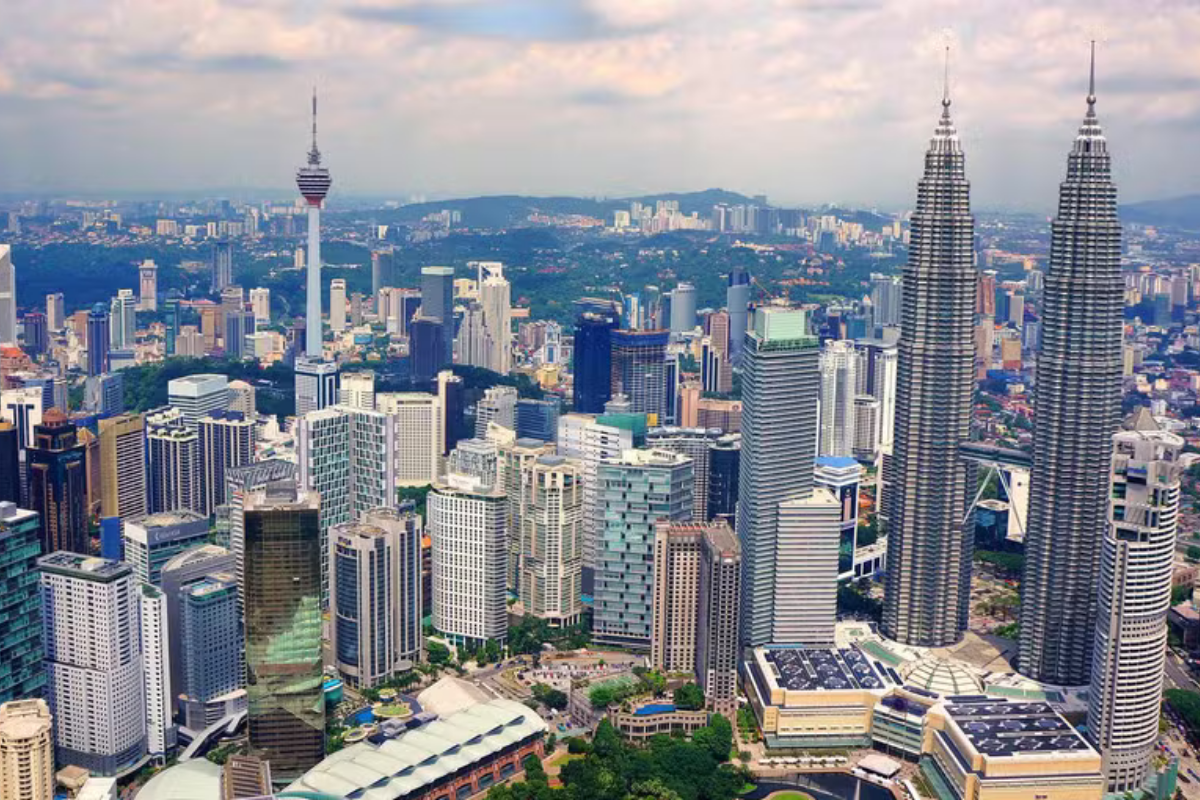
If you’ve been in Kuala Lumpur during the latter half of 2022, you’ve likely noticed that malls are bustling with customers, and cafés are crowded with patrons! However, the true topic of conversation is no longer just new gadgets and travel. I’ve also noticed lately that people are starting to ask more questions related to the startup scene. For example, I’m hearing more people at mamak tables finally asking, “So, what startup are you working for?” When I started working at a startup, my parents often asked me when I would be getting a “real job.” However, now, there seems to be an entirely new type of energy surrounding the startup community in Kuala Lumpur at the start of 2023. We are no longer just watching Singapore and Jakarta. We’re finally looking within our borders for opportunities. As such, if you’re just getting into the startup ecosystem in Malaysia, or if you’re trying to determine whether or not this startup thing is legitimate or merely a passing trend. Let’s sit down, and I will give you straightforward, no-BS Malaysia startup ecosystem insights.
The 2026 Landscape
Money is moving: Openspace Capital is doubling down on Malaysia, while MyCIF just passed RM1.5 billion in co-investments.
Infrastructure is changing: MRANTI is becoming an “Innovation District” in Bukit Jalil. No more old-school tech park vibes.
Hot sectors: AI, Blockchain (Zetrix), and Semiconductor chip design are the top three catches right now.
Jump To Section
The “Malu” Question: Is Malaysia Actually Ready?
To sum up, we have been insecure about our startup ecosystem. We’ve always looked at companies such as Gojek and Grab in Singapore and asked ourselves, why can’t we do that as well? However, now in 2026, the perception has changed from being shy to now having the courage to create. If you look back at the Malaysia startup analysis, money is not the biggest change. Rather, its been the change in the mindset to now tripling the likelihood of success when they launch their own venture.
This new group of entrepreneurs understand how to avoid mistakes and identify shortcuts . So, when I look around at all the other technology-based businesses in Malaysia to date I see less “digital peddlers”. Much more serious technology-based businesses (AI) focusing on serious engineering problems. The number of companies developing for the semiconductor supply chain is actually amazing given that Malaysia is one of the world leaders in this area. What I see happening in my opinion, illustrates that we are no longer simply creating delivery applications.
Follow the Money Who is Writing the Cheques?
Let’s discuss the Malaysian ringgit. A startup is considered an expensive hobby until money is raised. The most significant change that I have experienced this year (2026) is that foreign VC’s are no longer only “scouting”. They are establishing offices here in Malaysia. Companies like Openspace Capital, a large VC located in Singapore. They are expanding their presence in Malaysia through the establishment of physical locations – with multiple employees in their offices. Instead of sending junior VCs to scout out opportunities.
The reason for VCs establishing brands in Malaysia is because we are witnessing the maturing of the Malaysian startup funding ecosystem. Therefore, we believe that we have transitioned beyond the traditional “Friends and Family” funding rounds. Additionally, frequent dialogue exists about the Series A gap. Many startups will fail due to an inability to secure their subsequent round (equity) of funding. Nevertheless, with the expansion of government-related funding structures, such as MyCIF (Malaysia Co-Investment Fund), the government has committed to investing a total of RM1.5 billion. This figure represents a significant level of funding. As a result, if you are developing a fintech startup, or any other type of Web3 startup (with Token-X being launched in Selangor recently), the VCs are now responding to your unsolicited emails. This trend was not happening during the past 24 months.
Unicorns vs. “Zebras” in A Reality Check

People who are keeping track of the evolution of Malaysia startup ecosystem insights are familiar with the newly minted “unicorn” companies generating headlines. Like “Who Will Be the Next Carsome?” While chasing that “unicorn” status is attractive because it sounds exciting. This isn’t the only way a company can be deemed successful. In fact, after talking with many of the successful and smart founders today, it is apparent that a significant number of them prefer building “zebra” companies. That are making a profit at the time they build them instead of worrying about how much money they have to spend to grow their company by millions of dollars.
There are definitely unicorns in the works! Carsome is undoubtedly the crown jewel when it comes to being the most recognizable brand out of Malaysia and the only true unicorn to represent Malaysia on the world stage. However, there are a lot of other small players in the ecosystem that are starting to earn recognition. As example there have been a number of AI focused companies emerging, like Zetrix AI, which just received a substantial investment from the IFC (International Finance Corporation).
In addition to this, there are also a number of other municipal governments supporting entrepreneurial enterprises at the early stage through a variety of funding programs. For instance, Sarawak is providing up to RM150K in funding for all DiVA (Digital Services Ventures) participants. Recently, Pahang has rolled out its own version of a startup Blueprint program. Therefore, it is important to not become overly obsessed with hunting for “unicorns.” From the business standpoint, there are many advantages to forming a sustainable, profitable business that has enough revenue to sustain its employee base.
The “Support” System: Accelerators & Spaces
As a young entrepreneur, you no longer need to feel as if you are wandering aimlessly. The time for “kaki bangku” coding has long since passed. As there are now far too many accelerators and incubators in Malaysia for you to need to settle on any one program.
The Malaysian Investment Development Authority (MIDA) has taken on the role of “ecosystem connector.” They are matching startups with larger companies such as Government-Linked Companies (GLCs) and are doing a fantastic job at it. In Malaysia, having a contract with one of the GLCs or a governmental entity gives you a secure runway to grow your company.
In addition, we have places like the Malaysian Technology Park (MRANTI) located in Bukit Jalil. They have transitioned from being a “Technology Park” to wanting to be an “Innovation District” where people can live, work. And also have the opportunity to test their robots and drones within the same location. Finally, many innovation hubs are opening in other parts of the country including Penang and Johor Bahru. The infrastructure is in place for you to succeed. You only need to “bring the hustle” in order to create a successful startup!
The Hard Truth it’s Still Not Easy
I am not trying to be overly positive. I want to provide an insight into the challenges that we face in building our startup community in Malaysia. This is how Malaysia’s Venture Capital ecosystem looks: Simply put, it’s conservative. Yes, we have access to capital but our risk appetite is still less than our regional neighbours, and there are still significant barriers (i.e., banks) for new businesses that do not have three years of profitability which many would find humorous in relation to a new business.
The war on talent continues. Each time we develop a good coder, Singapore continues to aggressively pursue them. It is this reality that makes up the Malaysia startup ecosystem insights in 2025. We have come to terms with the region’s fierce annual competition for talent. Yet, I am still optimistic! The quality of Malaysians (talented and, predominantly, quantitative) is outstanding. Malaysians are efficient and do not spend unnecessarily. In this global economic climate – as most of the world moves forward, Malaysia will remain resilient and create long-lasting businesses.
Therefore whether you’re pursuing early stage funding for your new startup or just simply you’re looking for your second employee, Malaysia has set the table, has cooked the meal – we just need to enjoy it!